Nationalism is usually a good thing, but it has a dark side, e. g. the Nazis.
The first American colony was founded in 1708 to escape religious persecution. In the reformation religions were firming up their ideas, and if you didn’t believe in their ideas, then move to America, where there is no government.
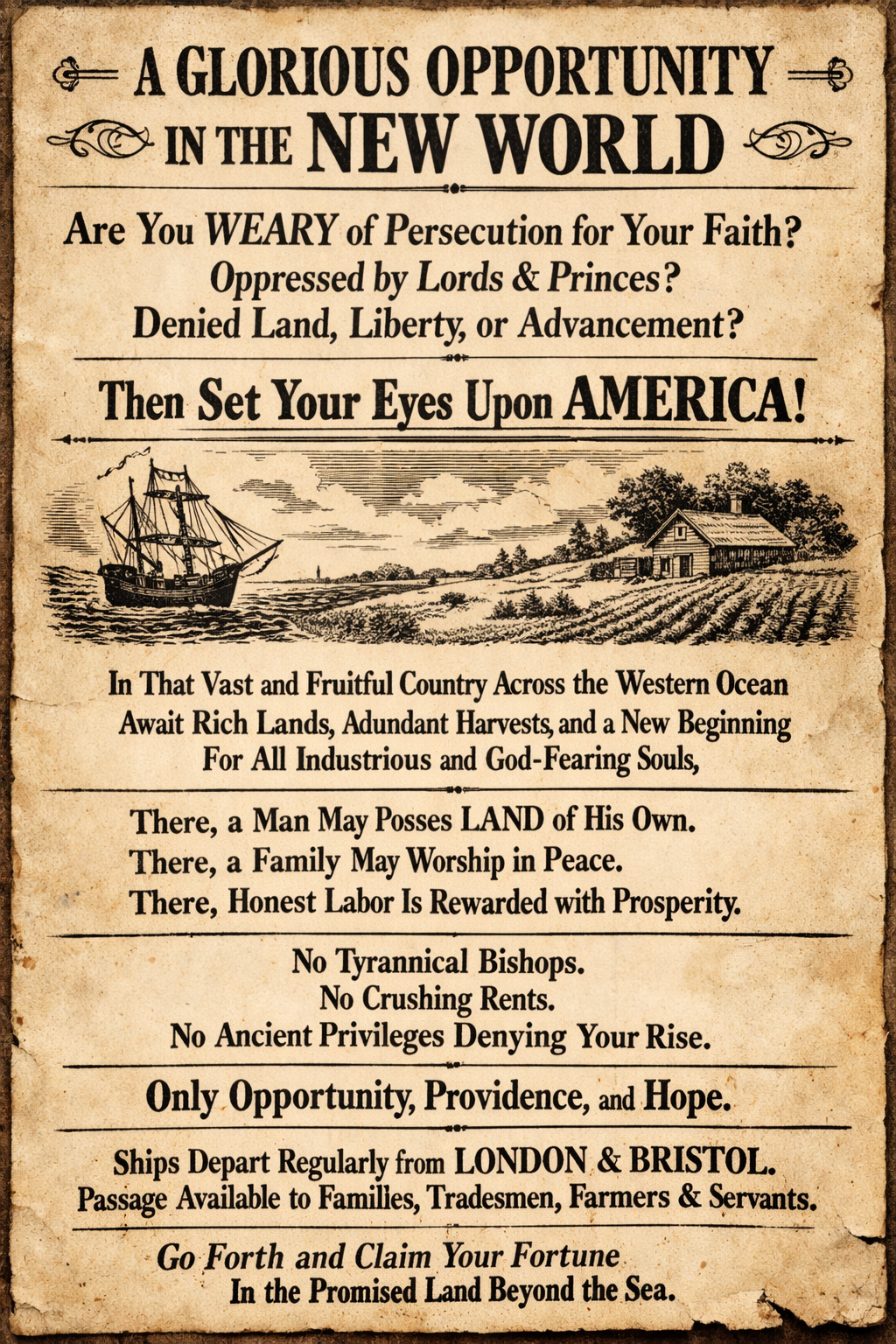
Thanks ChatGPT
I only use AI for funny things or bouncing ideas off it. The only place AI was used in this document was the image above.
# Why Colonists Chose America *Pull Factors* - Economic opportunities - Political and religious freedon - AdventurePush Factors
- Escape poverty and unemployment
- Escape political conflicts
- Escape religious intolerance
Migrant Groups
- Dutch settled in New Netherlands
- Swedes and Finns settled in New Sweden
- English Quakers settled in Pennsylvania
- English Puritans in New England
- Virginia Cavaliers settled in Virginia
- English Catholic AND Protestant settled in Maryland
- Germans settled in Middle colonies
Trade in Early America
Mercantilism: Involves government control of who gets contracts to trade. It aims to increase monetary reserves in a country through the minimisation of imports and the maximisation of exports1.
Imperialism was great for Europe because it gave them a closed circle economy: get the colonies to farm raw materials then send those back to the mother country. Then buy the manufactured goods back from the mother country.
Colonial government
The 13 colonies each had a governor an elected assembly and a court system however the british monarch and parliament controlled the colonies and had the power to pass laws that applied to the colonies what potential problems are there
The Royal Governor had a lot of power, he could dismiss the colonial assembly, was the final approver of any laws and reported to the King/Queen of Britain.
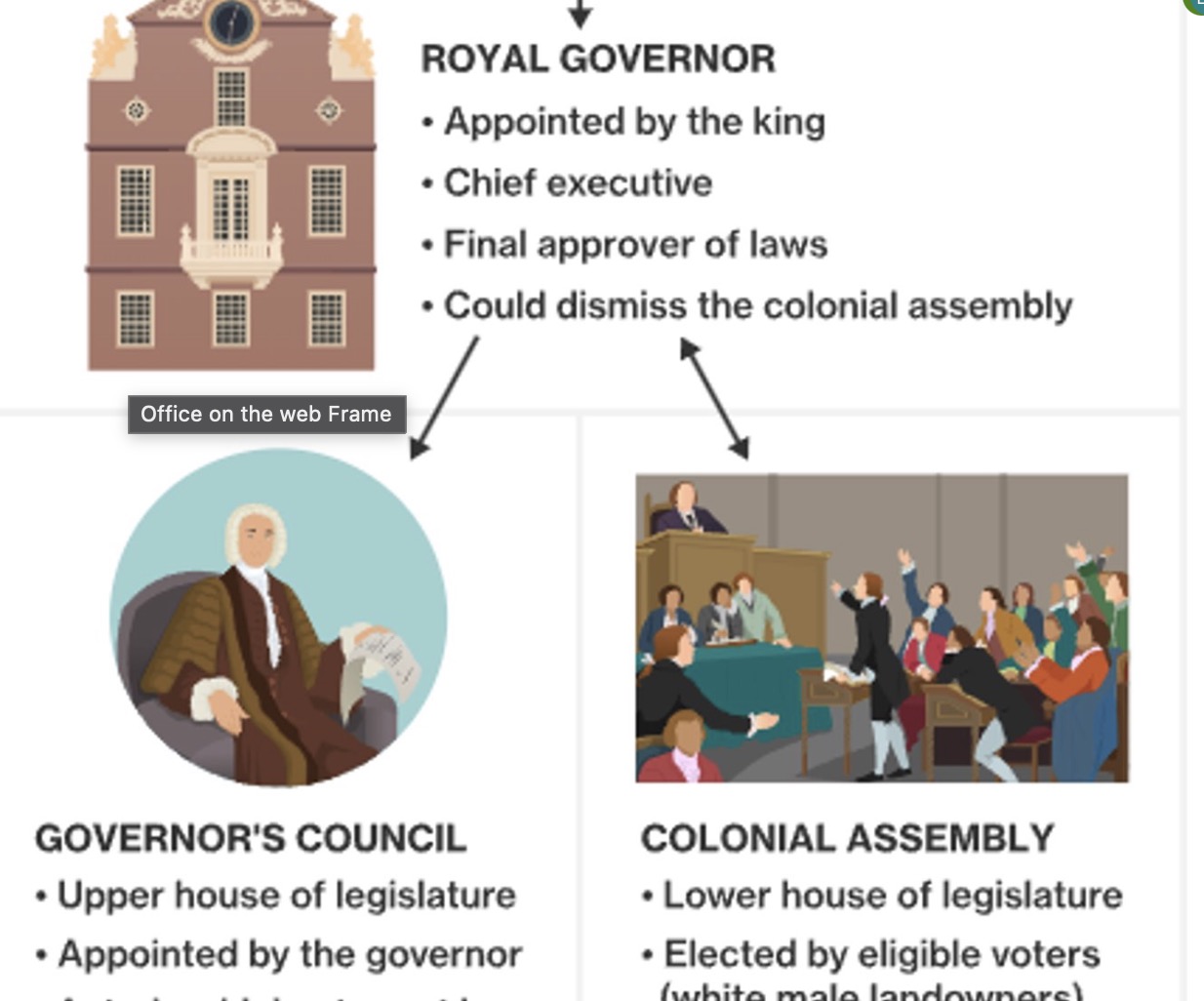
Acts Imposed on the American Colonies
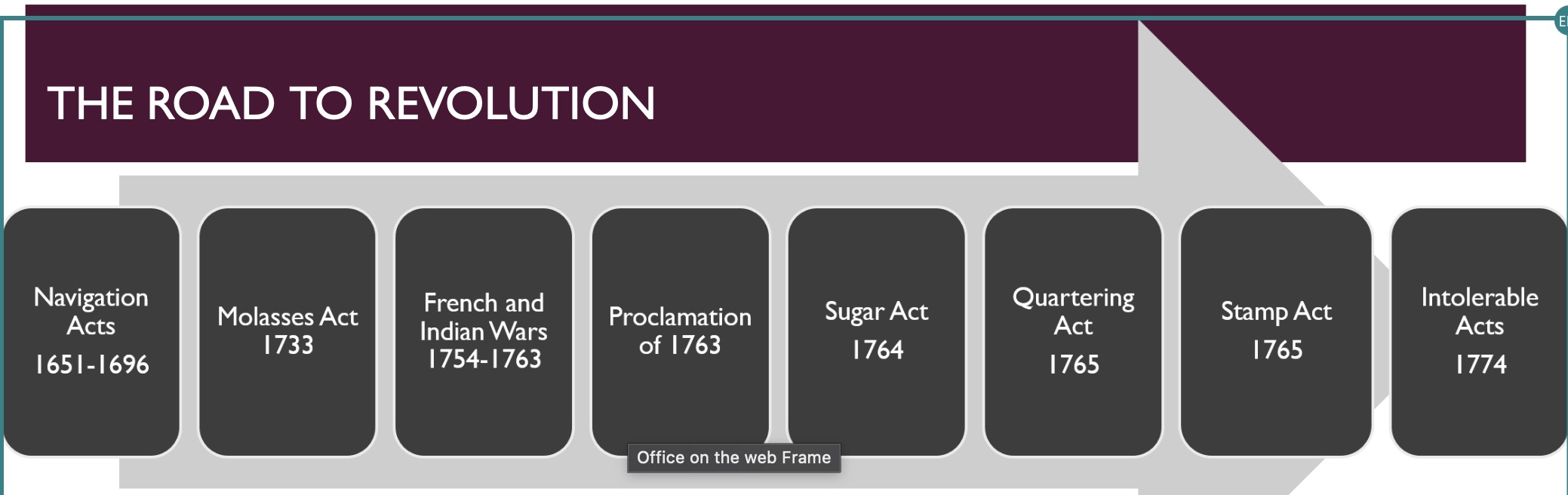
Navigation Acts
Restricted colonial trading to England, required all trade between England and the colonies to take place in English or colonial vessels.
Molasses Act
This act imposed a tax on molasses, sugar and rum imported from colonies or countries outside of the control of the British Empire. This led to a lot of smuggling.
French and Indian Wars
Wars that took place in North America, the ultimately ended in the French giving up control of Canada to the British.
Proclamation of 1763
The Proclamation of 1763 temporarily forbade settling west of a line drawn along the Appalachian Mountains which was delineated as Indian reserve.
Sugar Act
The Sugar Act attempted to put a stop to the smuggling of sugar and molasses that happened because of the Molasses Act
Quartering Act
The Quartering Acts required local authorities in the Thirteen Colonies to provide British Army personnel with housing and food.
Stamp Act
Imposed a direct tax on the British colonies and required many printed materials to be produced on stamped paper from London. The included legal documents, magazines, playing cards, newspapers and more.
Intolerable Acts
This law was basically meant to punish Massachusetts after the Boston Tea Party. The law took away the self-governing rights that Massachusetts had. The British government aimed to make an example of Massachusetts so that the other colonies wouldn’t start protesting too.
Sources
- https://www.ncpedia.org/navigation-acts-1651-1660
- https://www.britannica.com/event/Molasses-Act
- https://en.wikipedia.org/wiki/French_and_Indian_War
- https://en.wikipedia.org/wiki/Royal_Proclamation_of_1763
- https://www.britannica.com/event/Sugar-Act
- https://en.wikipedia.org/wiki/Quartering_Acts
- https://en.wikipedia.org/wiki/Stamp_Act_1765
- https://en.wikipedia.org/wiki/Intolerable_Acts
History of Early America
Settling
Thirteen colonies initially settled in America (see Migrant Groups). The 7 Years War was also fought in America in the *French and Indian Wars*. When Britain won the 7 Years War, they forced France to give up their part of North America (Canada), the the war had greatly drained The Crown’s resources. To replace the money in the bank, The Crown decided to tax the colonies. This led to rebellion by the colonists, using the slogan:
Quote
No taxation without representation!
The Boston Tea Party
The Boston Tea Party took place on the 16th of December 1773 in response to the British Government shutting down Boston Harbour because of failure to pay taxes on tea. The Sons of Liberty patriots threw 34 chests of black tea into the harbour. It was the strongest act of defiance towards the British government so far in America’s history. It led to the *Intolerable Acts* being imposed to try and make an example of Massachusetts.
Revolution?
By 1775, people were getting pretty annoyed:
John Adams to Thomas Jefferson
The revolution was in the minds of the people and this effected from 1760-1775 in the course of fifteen years before a drop of blood was drawn at Lexington.
Sons & Daughters of Liberty
The Sons and Daughters of Liberty helped organize colonist dissent and resistance to British policies. The boycotts implemented by the Sons and upheld by the Daughters forced the British to understand how serious the colonists’ grievances were. As a result, their actions helped lead to the American Revolution.2
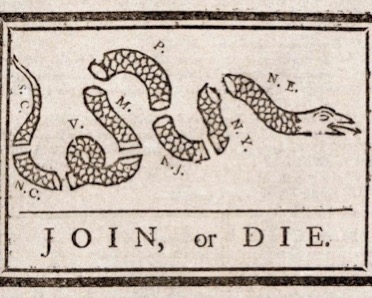
In opposition were loyalists. Loyalists were colonists in the Thirteen Colonies who remained loyal to the British Crown during the American Revolution. 3
Continental Congress 1774, 1775
Colonialist representatives met in Philadelphia in response to the Intolerable Acts. The Congress called for a repeal of Coercive Acts, created a unified boycott of British goods and agreed to form and train a colonial militia.4
2nd Congress 1755-1781
Colonial representatives met again in Philadelphia and began to function as independent government.5
The Shot Heard Round The World - April 19th 1775
British troops on their way to destroy weapons being stored by colonists were met by militia at Lexington, Massachusetts. No one knows who fired the first shot but it signalled the beginning of the War of Independence.6
The Declaration of Independance - July 4th 1776
A five-man committee made up of Thomas Jefferson, John Adams, Benjamin Franklin, Robert Livingston, and Roger Sherman were appointed to write a declaration explaining why the colonies should be independent. It was largely written by Thomas Jefferson who incorporated the influential ideas of the Enlightenment.7
Treaty of Paris - 1783
The agreement recognised U.S. independence and granted the U.S. significant western territory. The 1783 Treaty was one of a series of treaties signed at Paris in 1783 that also established peace between Great Britain and the allied nations of France, Spain, and the Netherlands.8
Sources
Button orange