Disclaimer: Notes are summarised or taken from the PowerPoint
Corrosion
Corrosion is the reaction between a metal and oxygen that results in a metal oxide.
I.e. Metal + Oxygen → Metal Oxide
E.g. Iron + Oxygen → Iron Oxide
The iron oxide is also known as rust, but other metal oxides are not called rust.
Factors that Promote Corrosion
Corrosion requires an active metal and oxygen gas or water. It is accelerated by the presence of
- salt
- acid
- heat
Preventing Corrosion
Most ways of preventing corrosion relying on insulating the metal from oxygen.
| Method | Description | Photo / Diagram |
|---|---|---|
| Paint | Paint creates a physical layer that stops moisture and air from reacting with the metal. | 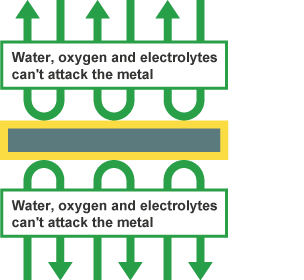 |
| Grease | Grease also creates a physical barrier that stops moisture and air from attacking the metal. | |
| Plastic | Acting as a physical barrier that seals out moisture, oxygen, and corrosive chemicals | |
| Galvanising | Iron is coated in zinc, which stops oxygen/water from attacking the iron. | 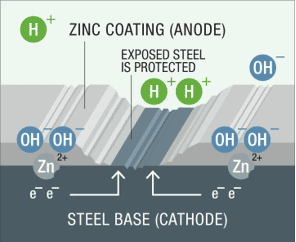 |
| Chrome Plating | Coats the object in atoms of a less reactive metal, slowing process of corrosion | 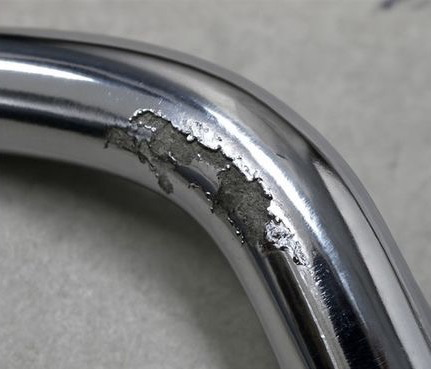 |
| Sacrificial Protection | The iron or steel object is coated in a metal from higher up the chain of reactivity, created both a chemical and physical barrier. | 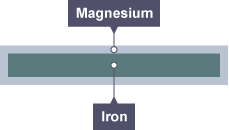 |
| Tin Plating | A uniform layer of tin covers the metal, preventing oxygen from contacting it. | 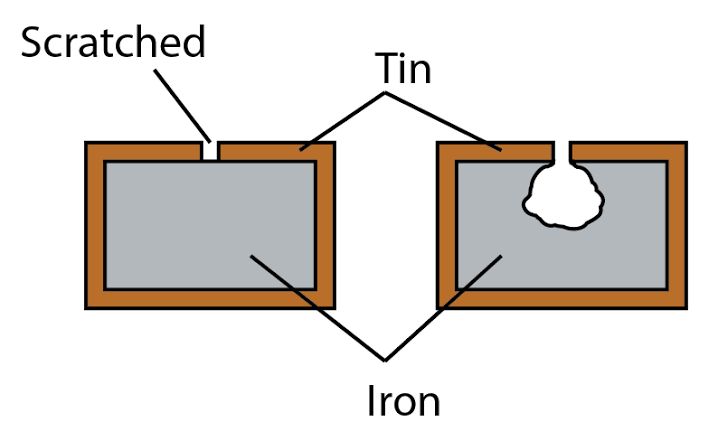 |
The Metal Reactivity Series
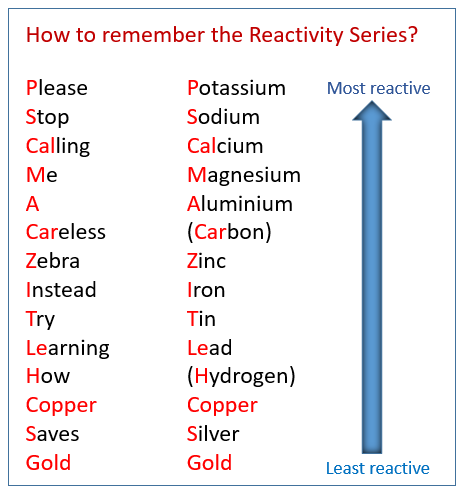
The reactivity of a metal is determined by how easily it loses electrons. When two metals are placed in contact with one another, the most reactive will provide a “sacrificial” protection for the least reactive.
Metals higher on the activity series:
- Are more likely to react with other chemicals
- Form compounds that are more stable
- Will provide sacrificial protection to those lower
- Are more likely to corrode
Displacement Reactions
Displacement occurs when a more reactive metal takes the place of a less reactive metal in solution. The solid metal (more reactive), moves into solution/aqueous, and the aqueous metal (less reactive) becomes solid.
For example, Zinc is more reactive than copper. This means it will provide sacrificial protection and displace copper out of the copper sulfate solution, causing it to form a solid residue on the Zinc rod. In turn, zinc will displace into solution, forming zinc sulfate.
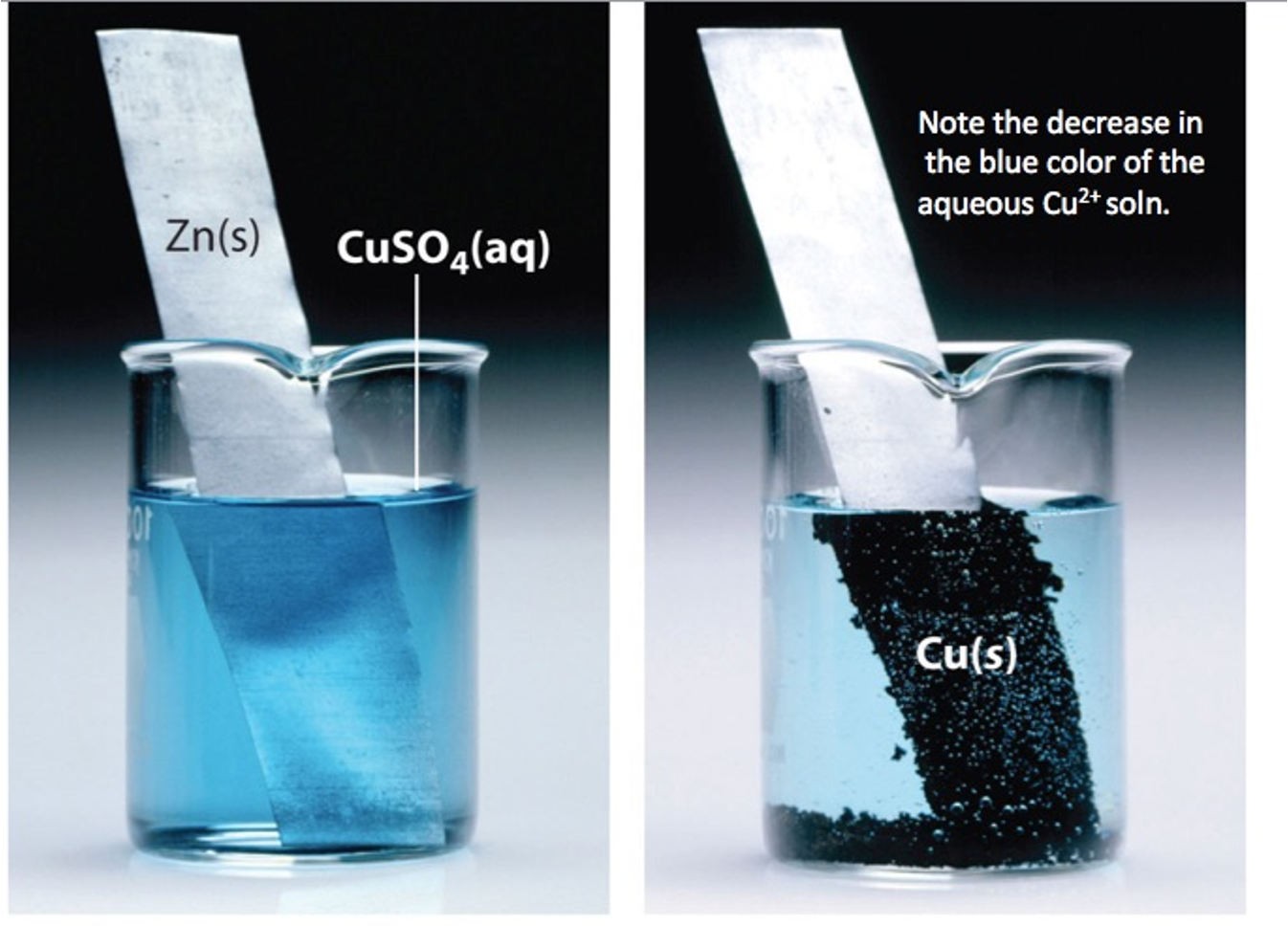
Zinc + Copper Sulfate -> Zinc Sulfate + Copper
Remember that the metals that are on their own are solids, and the ones in solution are aqueous.