Define the terms exothermic and endothermic and some examples of each type of reaction
Exothermic: a reaction that releases energy in the form of heat, light and sound, e.g. sodium hydroxide + hydrochloric acid
Endothermic: a reaction that absorbs energy, e.g. ethanoic acid and sodium carbonate
Outline the features of a combustion reaction
A useful explainer
Combustion occurs when a substance (usually a hydrocarbon) reacts with oxygen. When elements burn, an oxide of the element is formed. Additionally, all combustion reactions are exothermic, these reactions may be fast (e.g. rusting) or slow (e.g. wood burning).
Fuels such as natural gas and petrol contain hydrocarbons. These are compounds of hydrogen and carbon only. When they burn completely:
- the carbon oxidises to carbon dioxide
- the hydrogen oxidises to water - remember that water, , is an oxide of hydrogen
Distinguish between complete and incomplete combustion
- Complete combustion needs a plentiful supply of air so that the elements in the fuel react fully with oxygen.
- Usually
- Incomplete combustion occurs when the supply of air or oxygen is poor. Water is still produced, but carbon monoxide and carbon are produced instead of carbon dioxide. The carbon is released as soot. Carbon monoxide is a poisonous gas, which is one reason why complete combustion is preferred to incomplete combustion.
- Usually
Write word and balanced symbol equations for simple combustion reactions, given the products
Complete Combustion
Methane
Butane
Incomplete Combustion
Methanol
Describe the energy transformations during combustion reactions e.g. chemical potential -> heat, light
A combustion engine transforms chemical energy from fuel into thermal energy, and then changes that thermal energy into mechanical and kinetic energy to power a vehicle.
(Could use a better example)
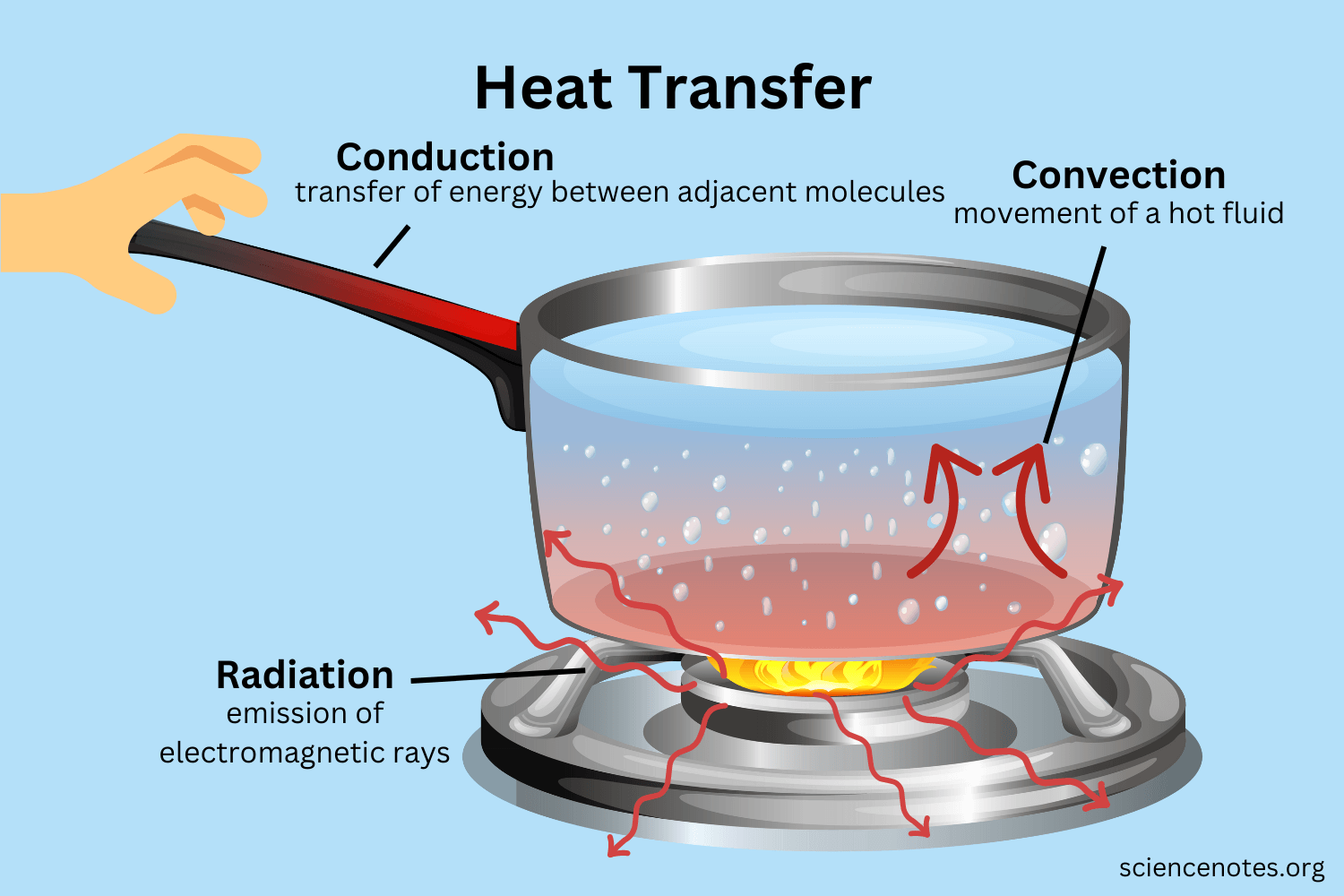
Draw diagrams to illustrate how the heat can be transferred in convection and conduction
Button blue