Outline the historical development of the atomic theory, including the contributions of Democritus, Dalton, Thompson, Rutherford, Bohr and Chadwick
| Name | Year | Description | Image |
|---|---|---|---|
| Democritus | 430-440BC | Proposed atoms were indivisable | N/A |
| Jahn Dalton | 1803 | Devised the first atomic theory | 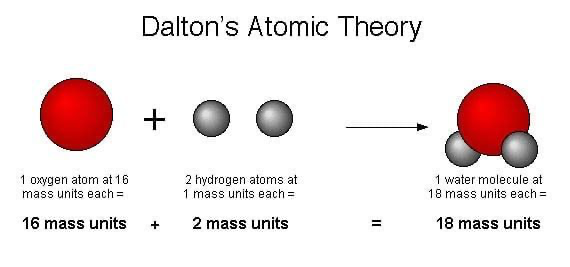 |
| J. J. Thomson | 1897 | Discovered the electron and proposed ‘plum pudding’ model | 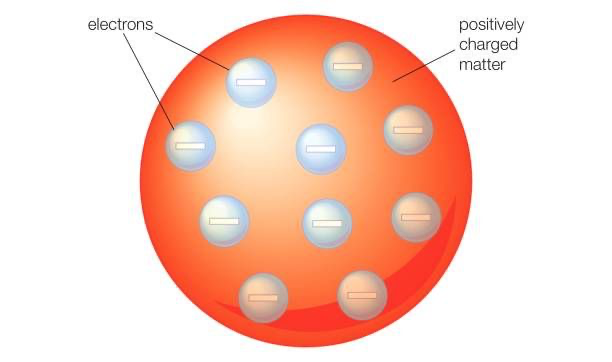 |
| Ernest Rutherford | 1909 | Conducted the gold foil experiment, finding that atoms had a tiny and positively charged centre | 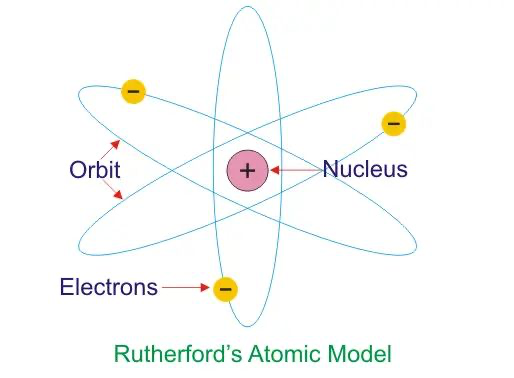 |
| Niels Bohr | 1911 | Introduced energy levels into atomic structure | 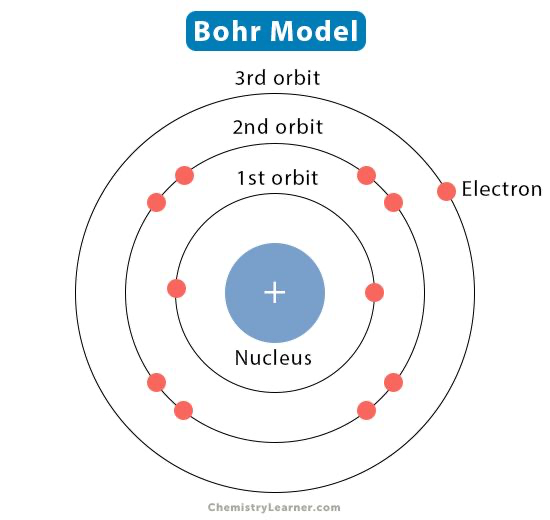 |
| Sir James Chadwick | 1932 | Discovered the neutron and that it resided in the nucleus | 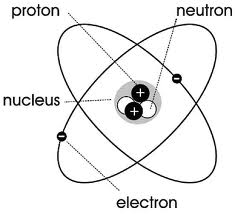 |
Use the example of Rutherford’s work on atomic theory to illustrate how models and theories have been contested and refined over time through a process of review by the scientific community
This Answer is AI Generated
Rutherford’s work on atomic theory shows how scientific models are challenged, reviewed, and refined by the scientific community.
Before Rutherford, J. J. Thomson’s “plum pudding” model proposed that atoms were a spread-out sphere of positive charge with negatively charged electrons embedded throughout. In 1909–1911, Rutherford and his colleagues Geiger and Marsden tested this model using the gold-foil experiment. They fired alpha particles at a thin sheet of gold foil. Most particles passed straight through, but a small number were deflected sharply or bounced back.
These unexpected results did not fit Thomson’s model. Rutherford proposed a new model: the atom is mostly empty space, with nearly all its mass and positive charge concentrated in a tiny, dense nucleus, surrounded by electrons. The scientific community assessed this explanation by examining the evidence, repeating experiments, and comparing its predictions with observations. Because Rutherford’s model explained the scattering results better than the plum pudding model, it gradually replaced Thomson’s model.
However, Rutherford’s model was not final. It could not explain why orbiting electrons did not lose energy and collapse into the nucleus, or account for atomic line spectra. Niels Bohr refined it in 1913 by proposing that electrons occupy fixed energy levels. Later, quantum theory further replaced Bohr’s simple electron-orbit model with electron probability clouds.
Therefore, Rutherford’s work demonstrates that scientific knowledge is not fixed. Models are accepted when they best explain available evidence, but they remain open to criticism, testing, review, and refinement when new evidence exposes their limitations.
Button blue