The Brain
Construct a table to describe the functions of brain, spinal cord and nerves
| Thing | Role |
|---|---|
| Brain | Process information and senses provided by nerves and decide how to respond |
| Spinal Cord | Connects nerves and the brain together |
| Nerves | Gather information and sense the world around them |
| *This is all really plain-speak, [[Teachers Tier List | Ms Wynne]] would probably get annoyed because it’s not scientific enough |
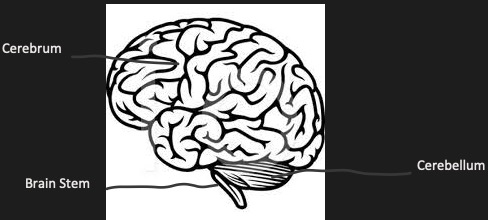
Describe the parts and functions of the brain, including cerebellum, medulla and cerebrum
| Area Of The Brain | Function |
|---|---|
| Cerebrum | Higher-order thinking, language, stimulus interpretation, |
| Cerebellum | Balance, posture, co-ordinating voluntary movements |
| Medulla/Brain stem | Survival/Reaction Mechanisms, Breath Rate, Heart Rate, Lower-Order Thinking; the stuff that keeps you safe day-to-day |
Parts of the Cerebrum
| Lobe | Role |
|---|---|
| Frontal | Higher order thinking: maths, creativity, language, logic |
| Parietal | Sensory information: spatial processing, knowing the body’s position in and navigating around an environment, Tetris |
| Temporal | Speech, hearing, smell |
| Occipital | Sight |
Label a diagram of a human brain
Nerve cells
Draw and label a diagram of a typical animal cell
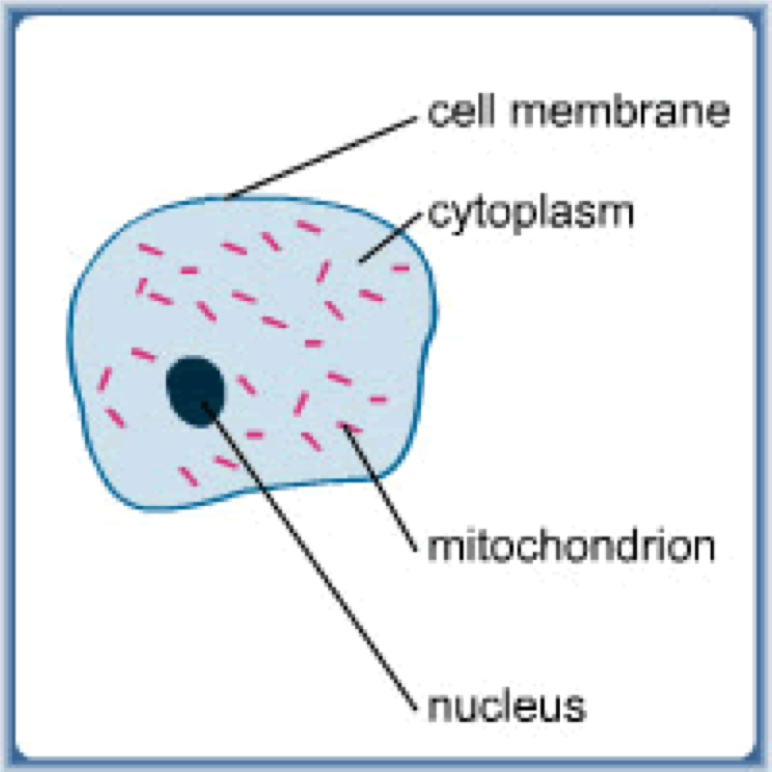
Tabulate the functions of the function of the cytoplasm, nucleus and cell membrane
| Structure | Function |
|---|---|
| Cell membrane | Control what enters and leaves the cell, maintains cell shape |
| Cytoplasm | Support cell structures, act as a medium for energy transportation |
| Nucleus | Stores and protects cell dna |
Draw and label a diagram of a typical neuron, including dendrites, cell body, nucleus, axon and direction of impulse
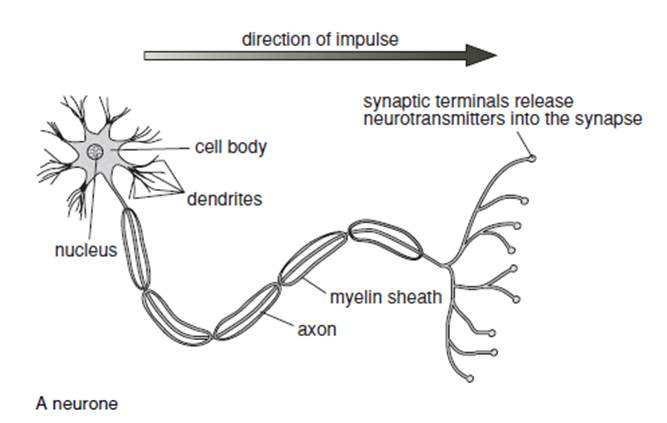
Draw diagrams to show the electrochemical nature of a nervous impulse
? It’s electwicity ?
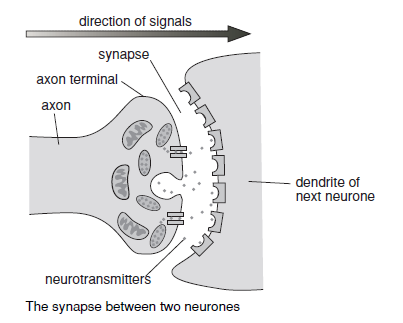
Use the explanation text type to explain how a synapse functions in simple terms
Between each neurone is a small gap called a synapse. For an impulse to cross the synapse chemicals called neurotransmitters are released by the axon terminals. Common neurotransmitters are dopamine, histamine and endorphin. When these chemicals reach the dendrites of the next cell it causes the next neuron to fire. This explains why the signal in neurons is known as an electro-chemical response. Along the neuron the signal is electrical while at the synapse the signal is changed into a chemical signal.
Compare the role and structure of sensory, connecting and motor neurons
| Neuron | Structure | Role |
|---|---|---|
| Sensory | 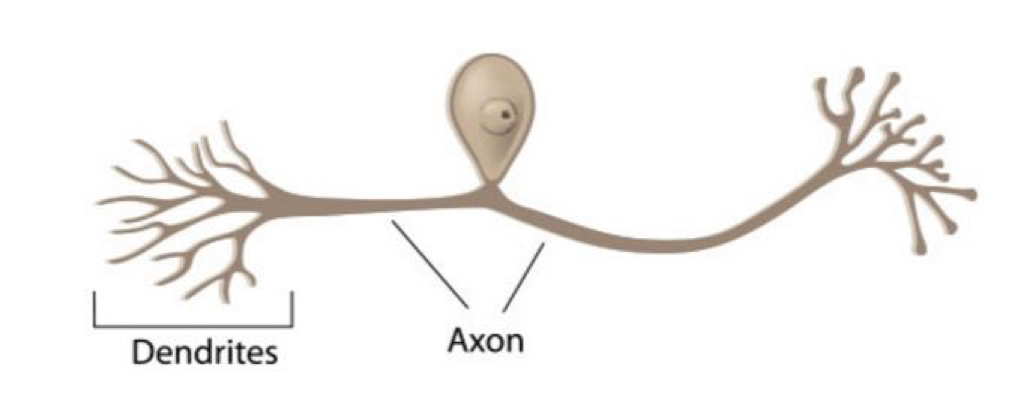 | Convert external stimuli from the environment into nervous impulses |
| Connecting | 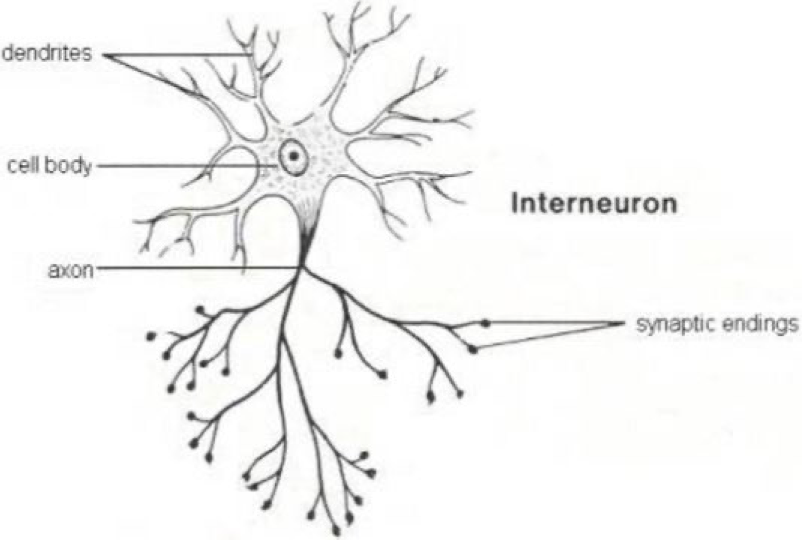 | Form connections between the sensory & motor neurons |
| Motor | 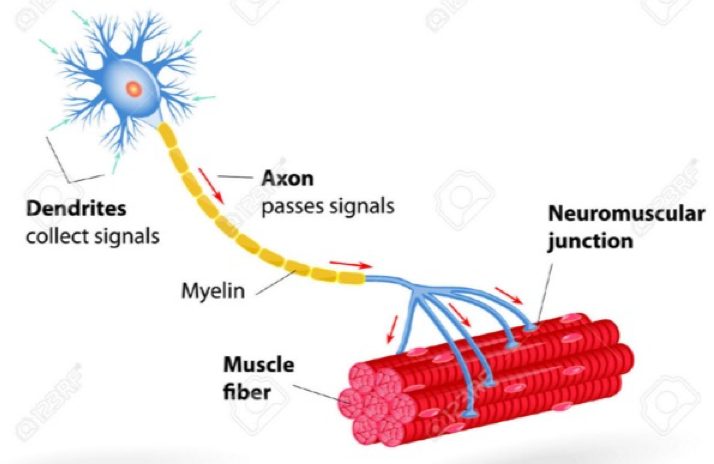 | Control muscles |
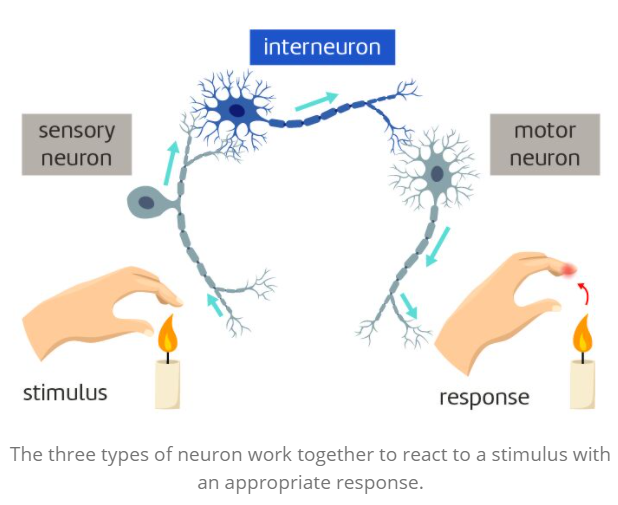 1 1 |
Reflex actions
Explain the reflex arc, using a diagram
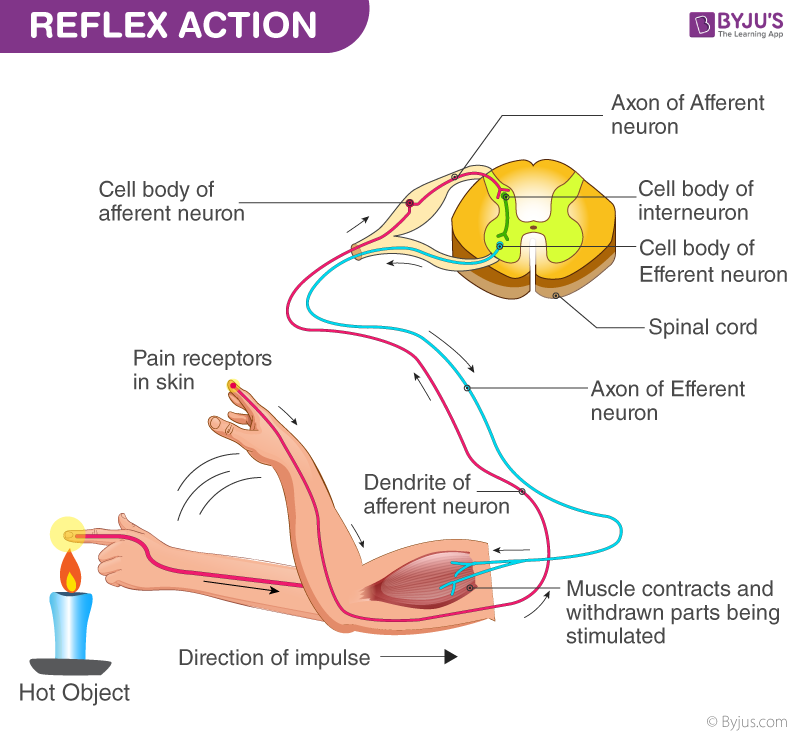
Describe examples of reflexes
| Sense | Sense Organ | Stimulus | Response |
|---|---|---|---|
| Sight | Eye | Bright light | Pupils shrink |
| Sound | Ear | Hearing nails on a chalk board (learn more about why this sound hurts in the video to the right) | Cover ears |
| Smell | Nose | Smell something like poo or vomit | Dry heave, gag |
| Test | Tongue | Tasty food? | Release dopamine (happy hormone) |
| Touch | Skin | Touch something hot | Moving your hand away |
Outline a fair test to measure reaction time
Use this website to tell you how long it takes to react to different colours showing on screen.
That was not an outline, but whatever.
Outline how to conduct a fair test to determine the threshold of a stimulus
No.
Footnotes
-
This diagram does not include the brain, even though it probably should. ↩