The First Line of Defence
Identify and describe the main parts of the immune system
There are three lines of defence in the immune system and each play a vital but specific role. The first line of defence aims to stop pathogens entering the body in the first place, and if that fails, killing them quickly.
Identify the mechanisms used in the first line of defence, such as barriers, pH, secretions, etc
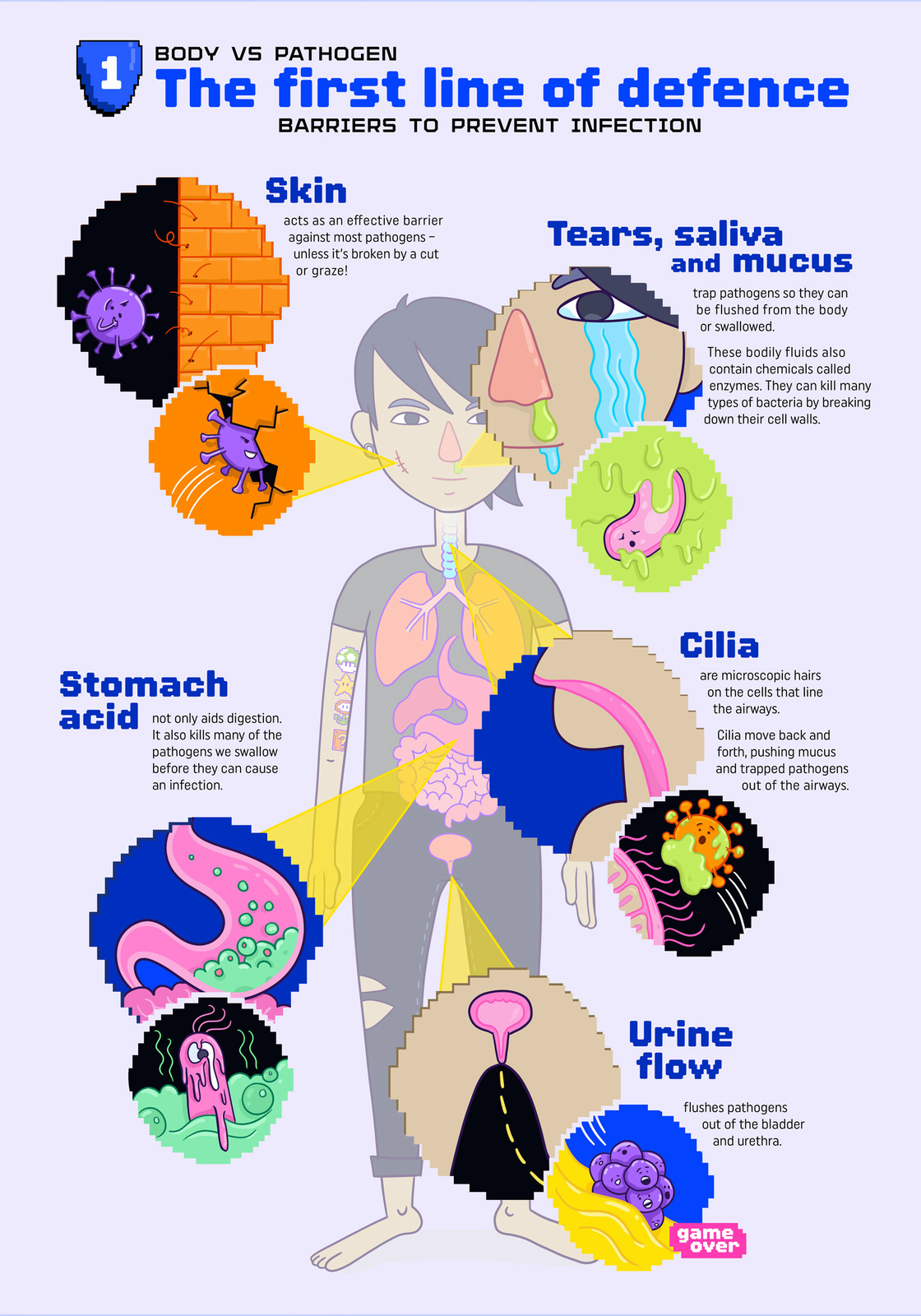
| Part | How it prevents infection | Physical or Chemical Barrier? |
|---|---|---|
| The skin | A physical barrier to prevent bacteria from entering the body | Physical |
| Mucous membranes | Mucous contains enzymes that break down some bacteria and physically trap other pathogens. | Both |
| Cilia | Cilia are hair-like structures that move trapped pathogens in mucus up and out of the lungs either out through the nose or into stomach acid. | Physical |
| Chemical secretions | Chemical secretions break down pathogens and can include saliva, tears, mucous and stomach acid. | Chemical |
The Second Line of Defence
Describe phagocytosis [and the second line of defence]
The Second Line of Defence
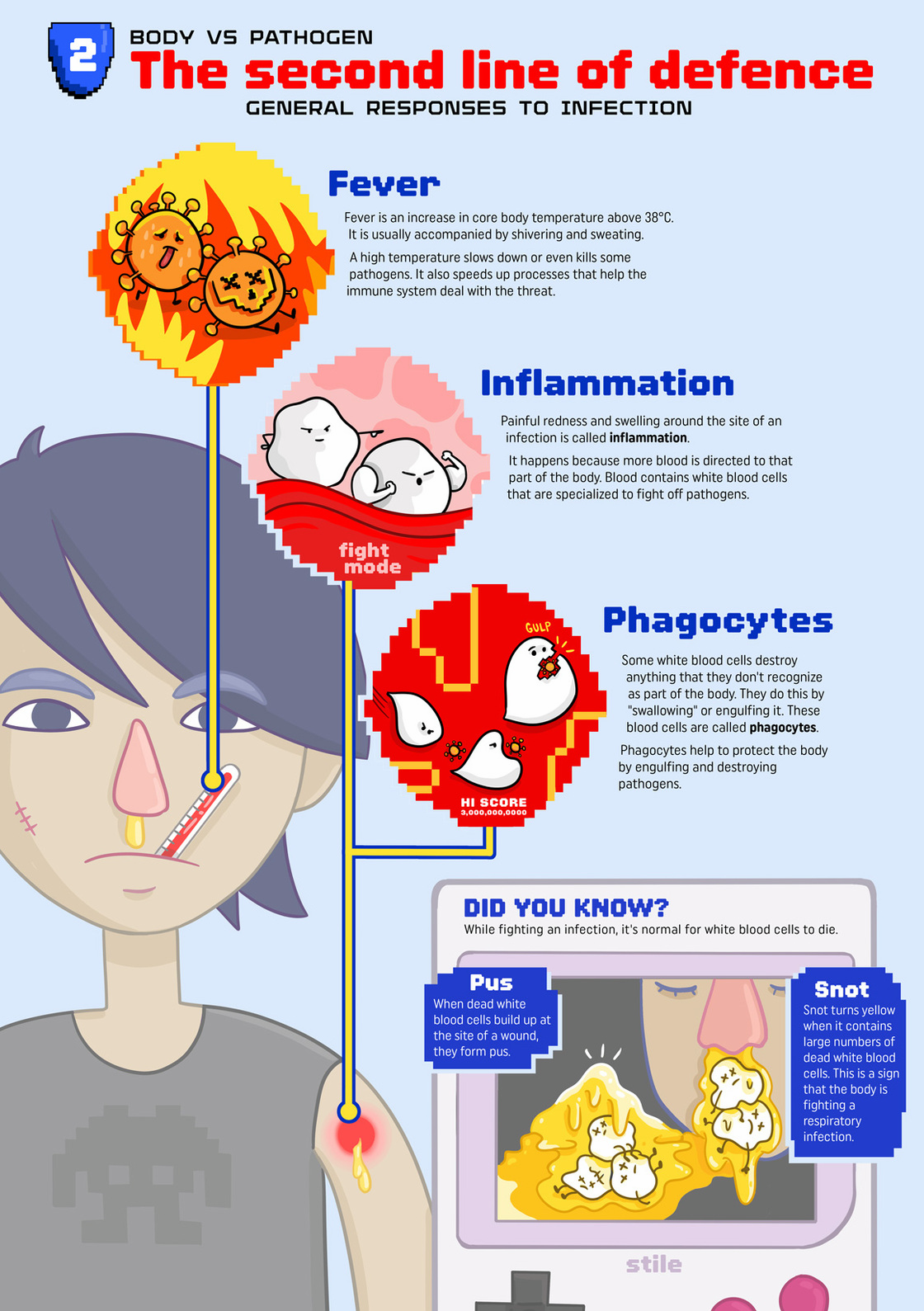
| Part | How it helps |
|---|---|
| Inflammation | Inflammation leads to increased redness, heat, and swelling of the affected area. It is the response of the body that intends to limit the spread of the foreign material, bring in specialized cells to help destroy pathogens, and make the localized environment hostile. Capillaries in the area response by increased dilation, increase permeability, enhanced delivery of clotting elements, enhanced migration of the phagocytic cells. |
| Fever | If damage of infection is severe, a widespread non-specific response may occur, leading to increased body temperature, quickened repairing of tissue, and facilitates phagocytosis. It also inhibits the growth of some microorganisms. |
| Phagocytosis (think ‘pac man’) | Phagocytosis is the process whereby large white blood cells envelope pathogens and destroy them via enzymes. |
The Lympahtic System
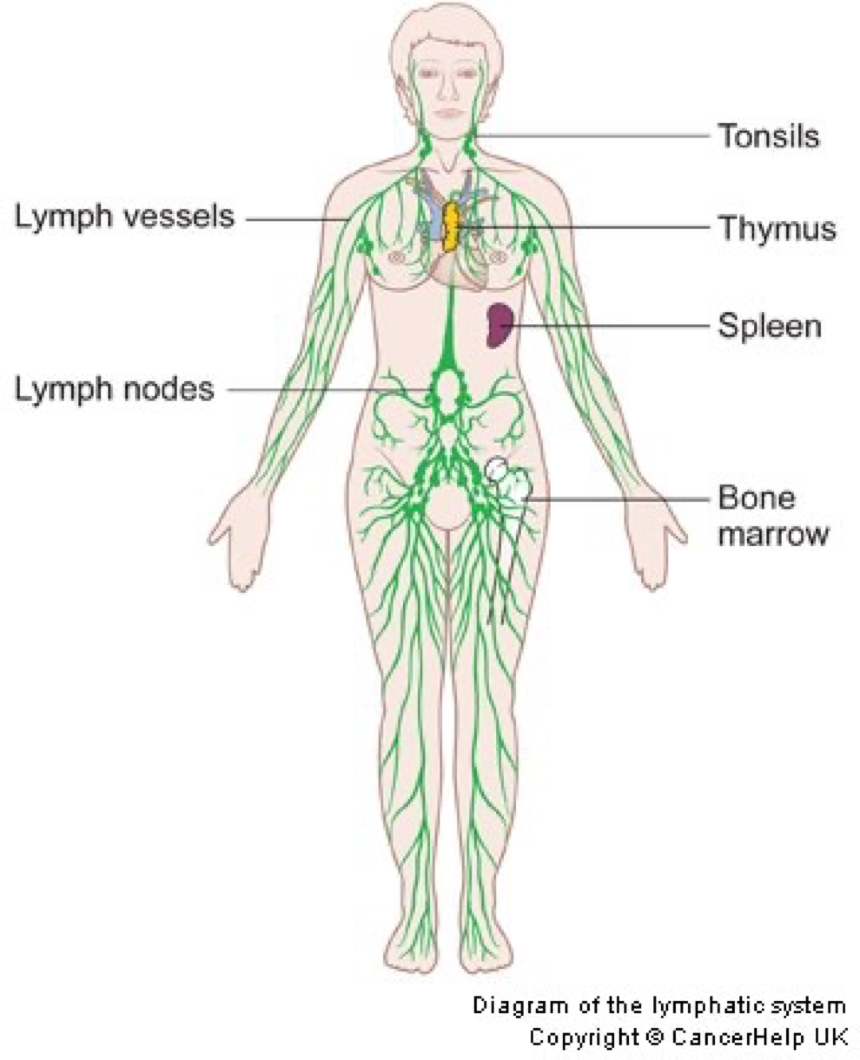
- Lymph vessels form a one way drainage system from all parts of the body back to a point near the heart.
- At different points along the lymph vessels, there are structures called lymph nodes
- During infection foreign particles along with dead cells and other debris move through the lymph vessels to the lymph nodes .
- Here waste particles are filtered out of the lymph and foreign particles are destroyed by the macrophages (a phagocytic cell).
- Swollen lymph nodes are a good indication of infection.
Third Line of Defence
Define the term antigen
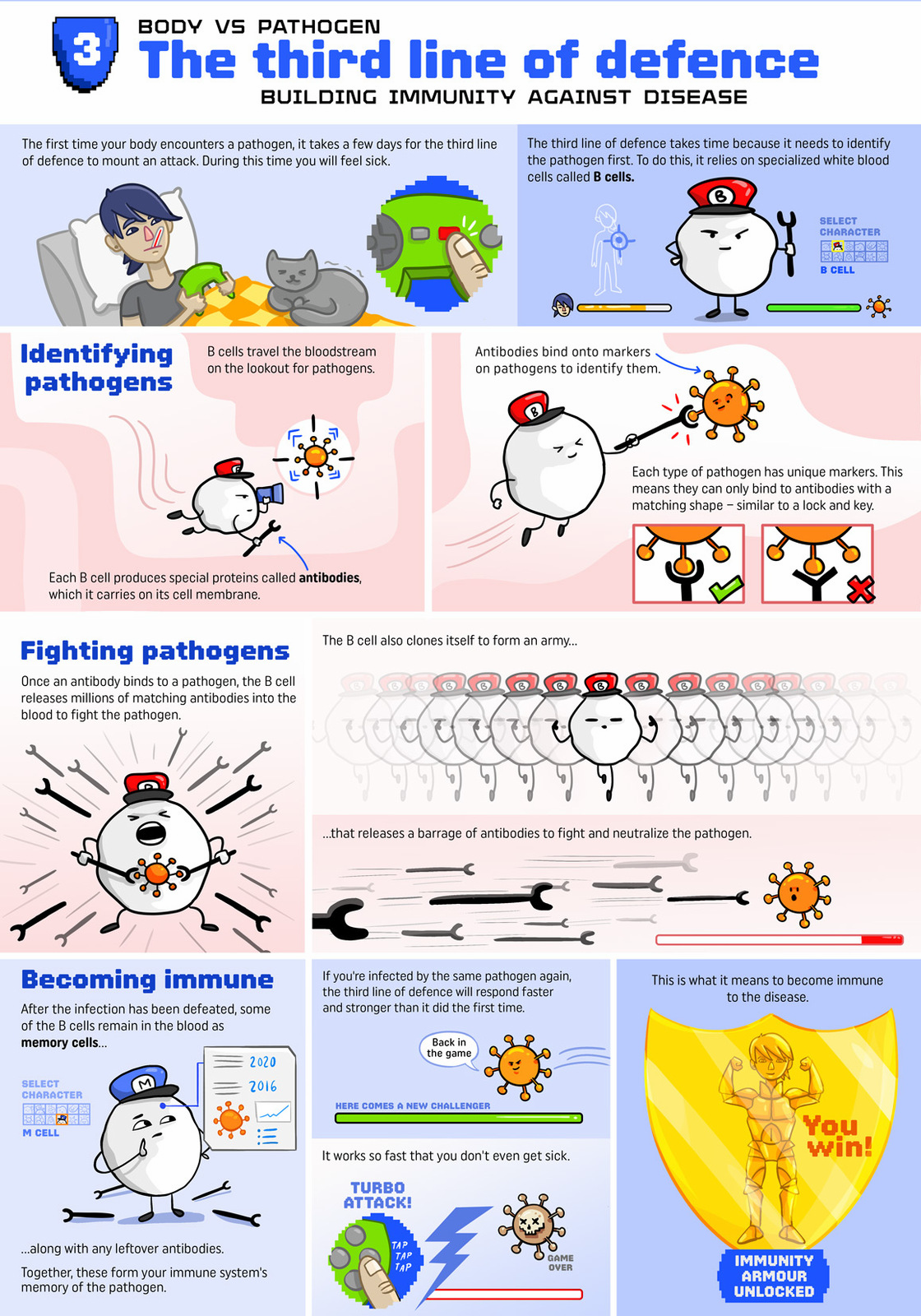
An antigen is a molecule capable of inducing an immune response in another organism. Antigens act to identify cells are FOREIGN.
All invading cells have distinctive antigens on their surface. When the specific white blood cell comes across a microbe, it will:
- Make an antibody to match the microbe’s antigen
- Tell all the other specific white blood cells to make lots of that antibody
- Antibody binds the antigen, inactivates it, and flags the pathogen for phagocytosis.
Outline how B cells produce antibodies, resulting in the antigen-antibody complex
- White blood cells detect the antigen inside you.
- The B cell (a type of lymphocyte) matches the antigen to produce antibodies.
- The antibody binds the antigen (antigen-antibody complex) and then renders the invader inactive and “marks” it for T cells and macrophages for destruction.
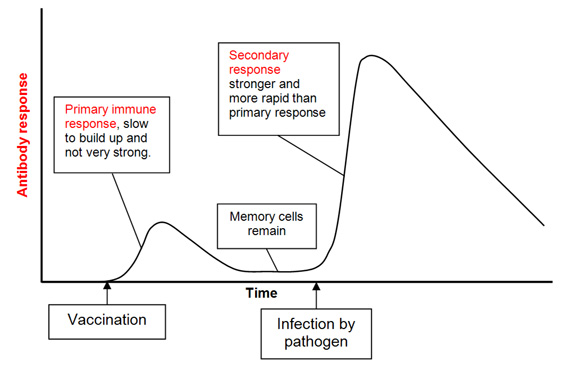
- B cells then make memory B cells that stay in the blood ready to jump into action and make more antibodies If that same antigen is encountered again.
A graph is shown in the vaccinations section about how antibodies respond to diseases over time, when they have had the disease before.
Vaccinations
Define the term immunity
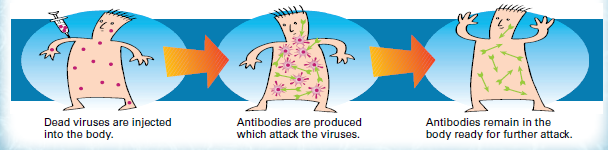
Vaccination is a purposeful administration of antigenic material to produce immunity to a disease.
Explain how an infection leads to the production of memory cells by lymphocytes results in long term immunity
Describe how immunity can be stimulated by vaccination
Vaccination leads to the production of memory cells that remember a virus and react quicker to it when you’re infected for real. This response may be so quick you don’t even know you have it.
Discuss reasons why childhood vaccinations are an essential part of the public health program
Childhood vaccinations allow for herd immunity to occur, where enough people in a community are immune that there aren’t enough people to pass a disease onto to make it dangerous, causing it to die out,
*This is not discussed but that’s a problem for later me